Professional Live Event Sound for Brevard County

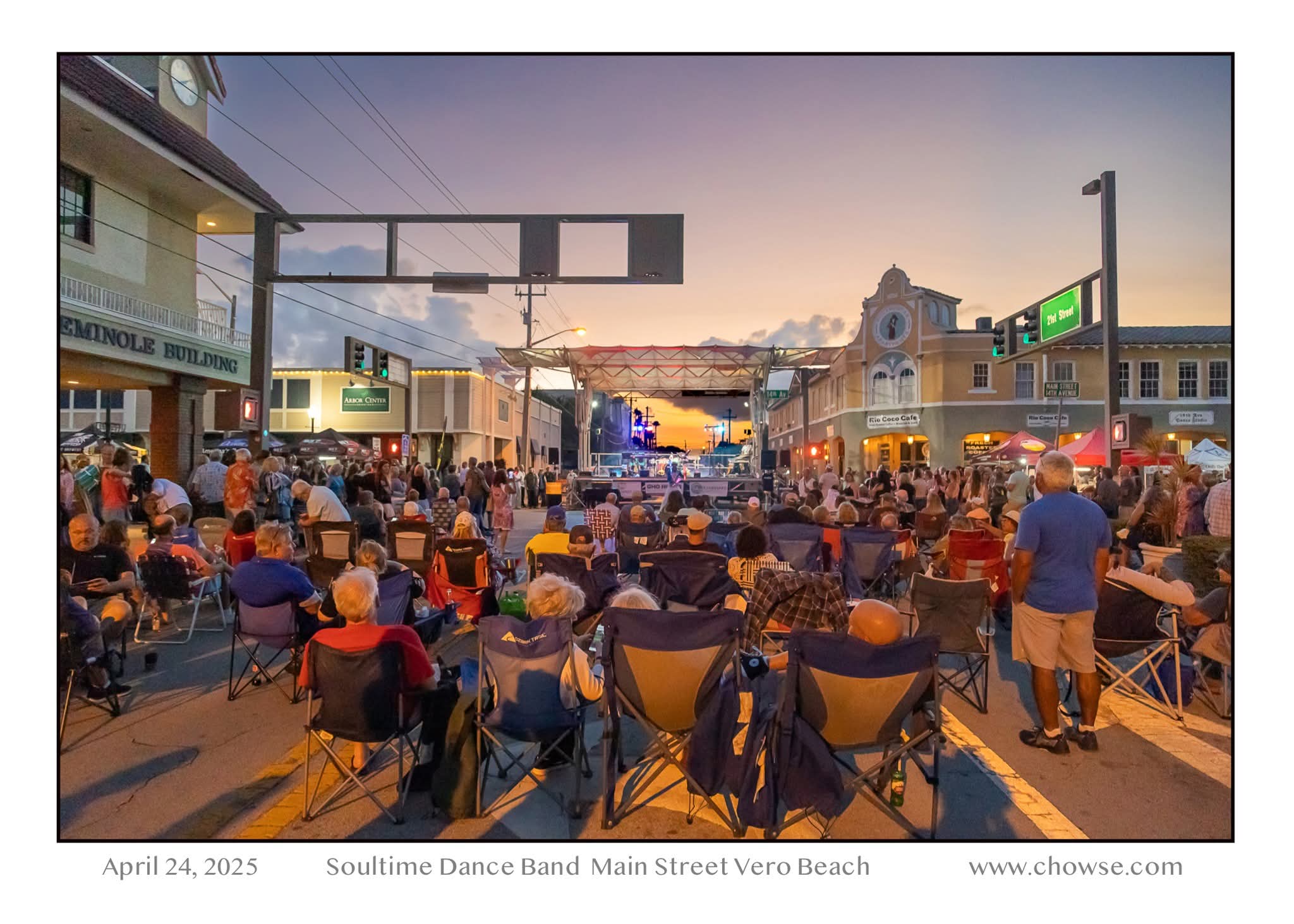
Professional live sound for smaller gatherings to mid-sized and larger events. Specializing in concerts, corporate events, civic functions to weddings, Laima is here to help across Brevard County. We deliver crystal-clear audio experience that is warm, inviting and memorable.

Book an event

Turning Tricky Rooms & Outdoor Events into Impactful Soundstages

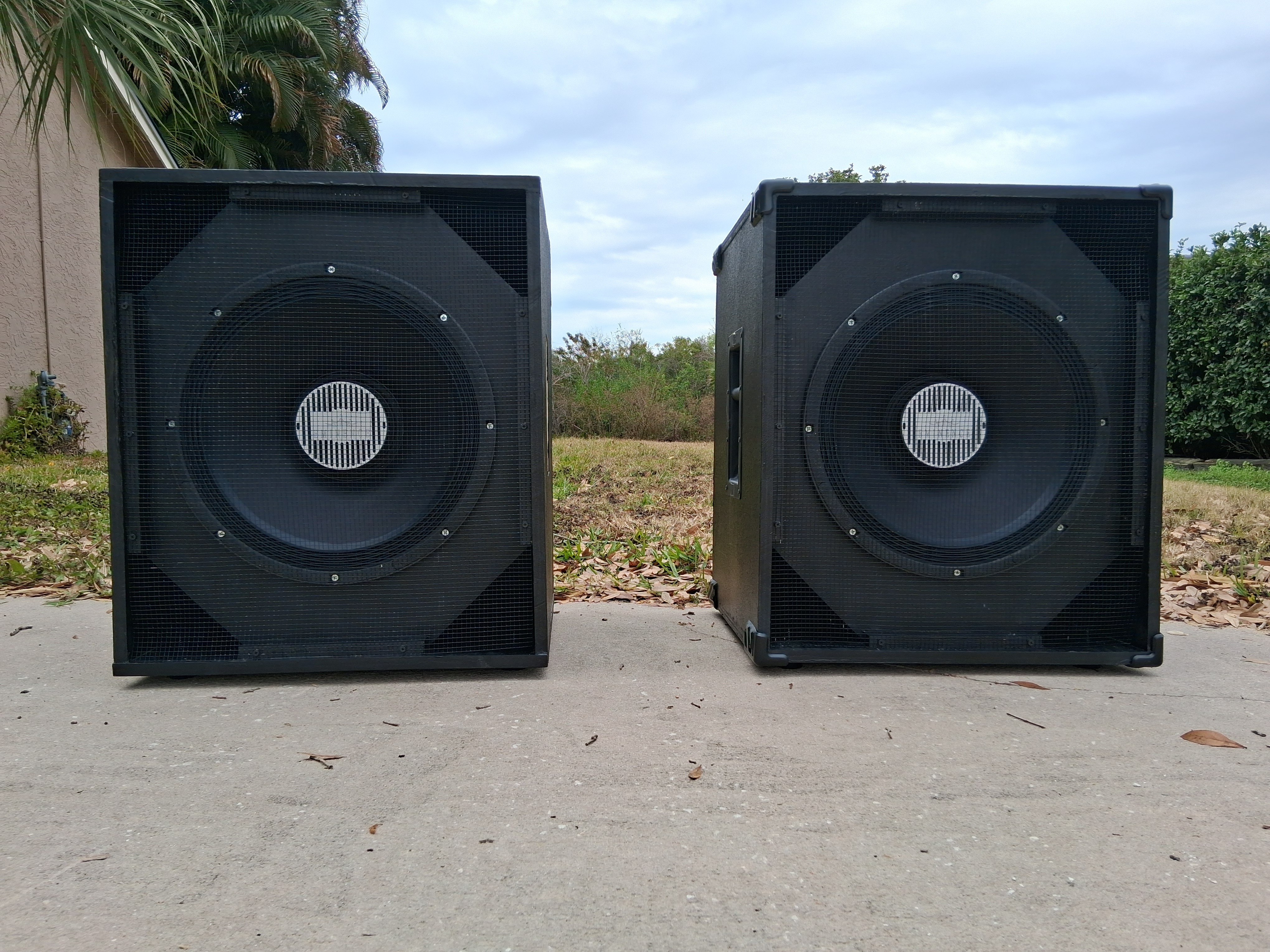
Brevard venues vary wildly from the humid acoustics of beachside halls to the reflective concrete of corporate spaces. We adapt with clean analog signal chains to maximize and tailor the audio experience: trusted proven professional audio gear, precise set-up for mains and subs, and room-specific EQ. No cookie-cutter presets; every gig gets a personalized treatment. This means clarity, punch and warmth that translates from stage to seats.

We care about how the event sounds and how to achieve a truly impactful experience for all attendees. To accomplish this, we avoid equipment that is simply LOUD with no fidelity. We have experienced this in previous local events that we were not hired for. Our pledge is not to do this to our clients and community.  Not all audio equipment sounds the same. We have learned a few things along the way providing pleasant high fidelity audio for every event.
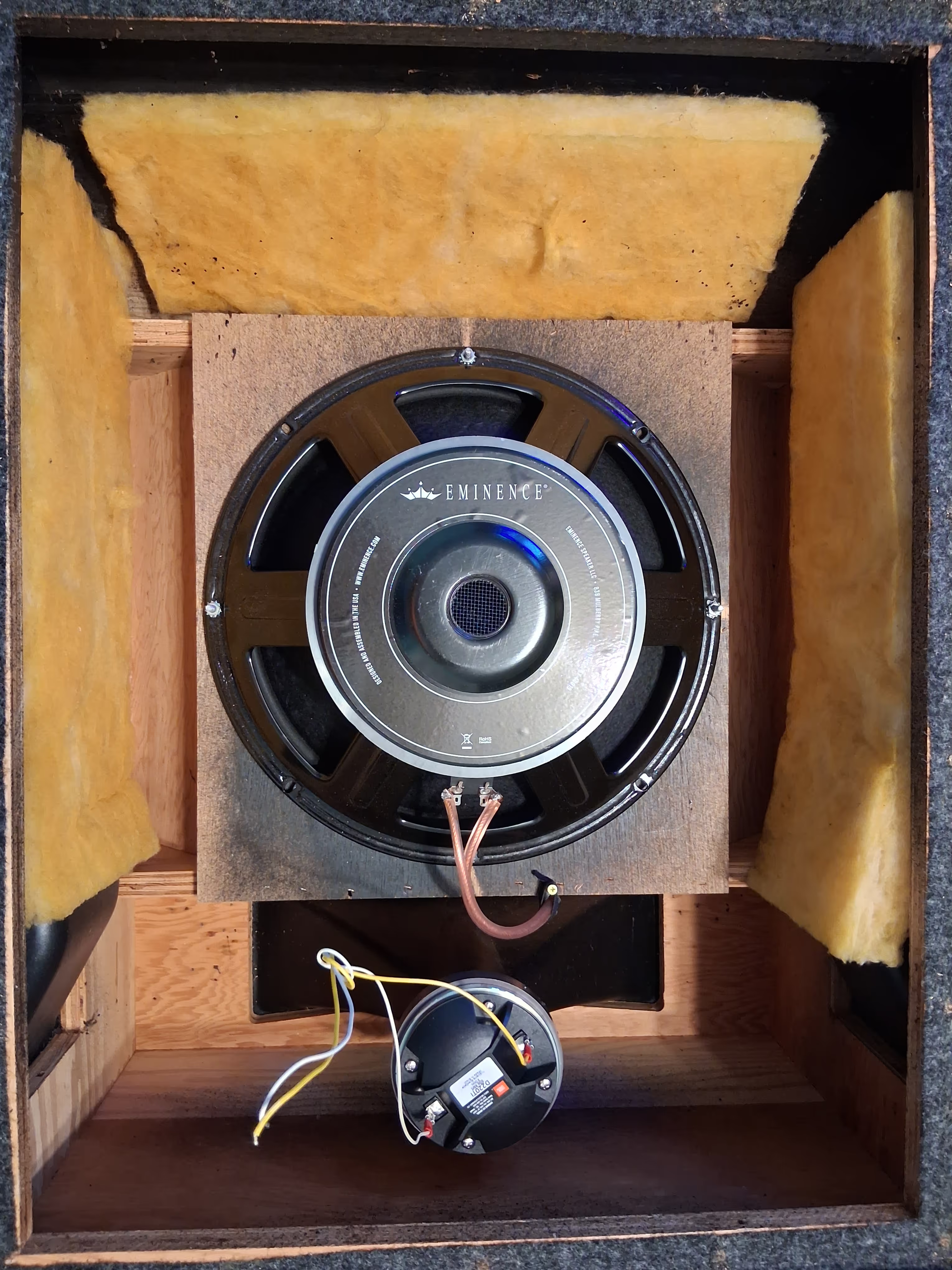
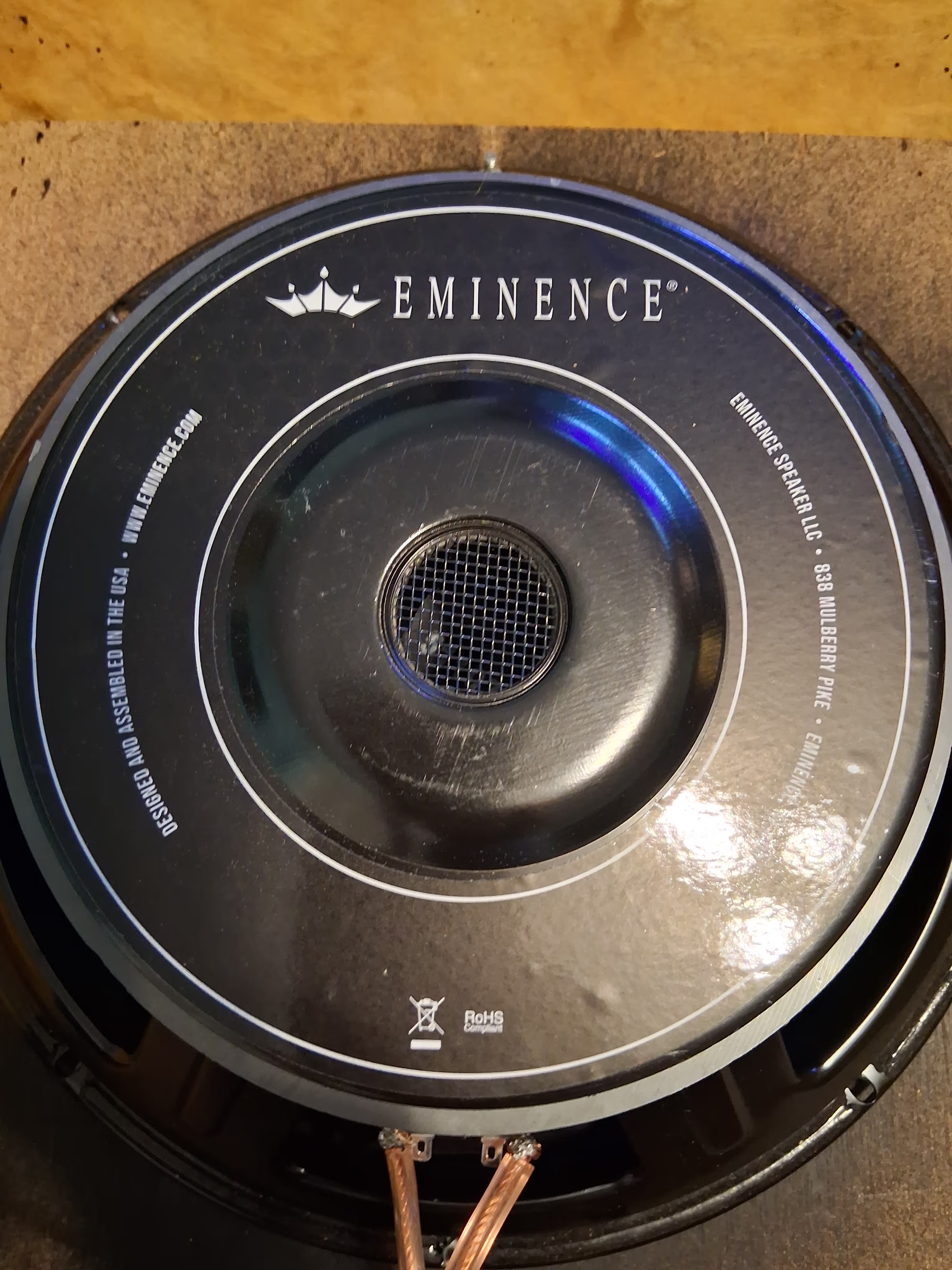
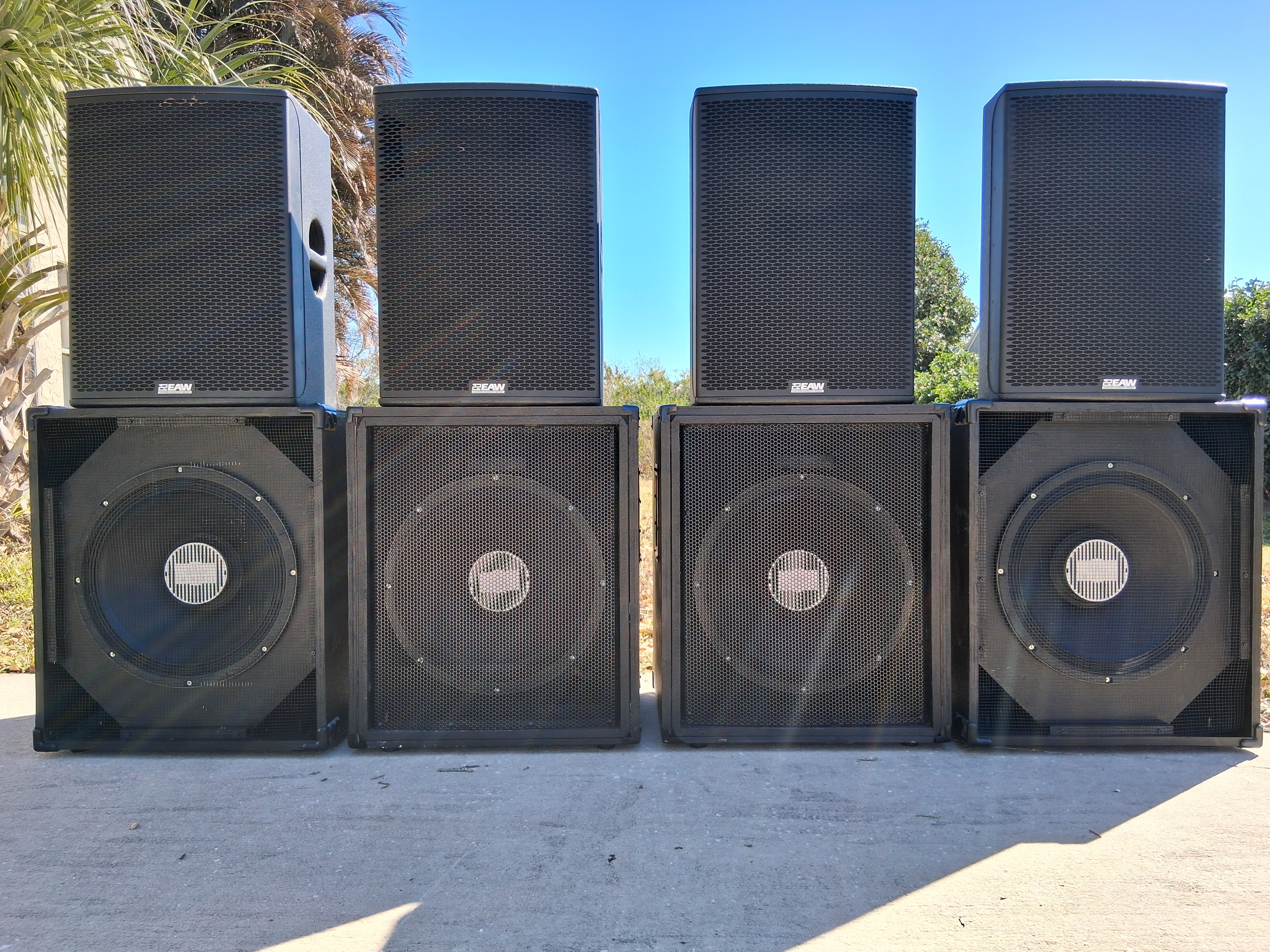
Custom Upgraded Wood Speaker Cabinets, Efficient Speaker Ferrite Drivers Both Eminence & JBL, Analog Signal Chains, Constant Power Class A/B Amplification (3400 Watts)
(Say No To Harsh Audio!)
Smooth Point Source Approach To Speaker Placement
Laima focuses on audio quality, comfort and clarity throughout the event. Our clients always say the audio sounds great! We will do the same for you! Based in Melbourne, we serve all of Brevard County and the Space Coast.

Dashboard mockup

Live Event Sound

Professional live sound for wedding performances, corporate events, churches & concerts across Brevard County. Full PA system + experienced engineer included.
$300/Starting
Max event size 500 people*
Book an event
Experience the difference of high-resolution live audio
Impressive audio quality for both your talent and audience
Powerful PA system with minimal footprint
Thirty-year experienced audio engineer
We skillfully mix for the age of audience and style of music.
Corporate events with tracks and or full band complement

FAQ Live Event Sound

Everything you need to know about sound reinforcement
What are the power requirements for live event sound reinforcement?
Power needs for live event sound systems depend on two main factors: event size (audience count and coverage area) and amplifier type. Small events (under 300 people): Typically manageable with lower power. Small-to-medium (300–700 people).Medium (700–1,500 people). Large (1,500+ people): Require significantly more. The second key factor is amplification class. Class D amplifiers are highly efficient, drawing less current while claiming high peak wattage but in live sound, they can sometimes trade off warmth and reliability for efficiency. Class AB amplifiers deliver solid, clean, punchy sound with natural dynamics, though they consume more power and need robust electrical support. There's no perfect solution: skimping on power with any amp class risks distortion or dropout. For small to medium events, 3–4 dedicated 15–20 amp circuits (120V in the US) usually suffice, with cable runs under 50 feet and lower-gauge (thicker) wire for minimal loss. Larger events often need 240V sources plus power distribution boxes to provide clean, separate circuits for mains PA, stage backline, and lighting ensuring stable power without voltage sag affecting quality. We always survey venue power upfront for Brevard County events (Melbourne to Cocoa Beach).
How does the event size affect what type of PA system is required?
Event size primarily impacts two factors: even sound coverage across the audience area and consistent quality at usable volumes (typically 90–100 dB clean SPL, measured with the crowd in place). Small events (club gigs or under 300 people): A simple powered column speaker or compact tops + sub on stands often suffices. Low power needs, easy setup, and intimate coverage without overkill. Medium events (300–1,000 people): We scale to multiple boxes usually 4 tops (high/mid drivers) and 4–6 subs to move more air evenly. Low frequencies require significantly more energy, so sub count often exceeds tops for balanced bass that reaches the back without muddiness. Large events (1,000+ people): Higher multiplication of cabinets is needed, either in point-source clusters or flown line arrays on each side of the stage. Amplification and power distribution increase accordingly to maintain clarity and throw distance. Both point-source and line-array approaches have trade-offs (coverage pattern, setup time, venue constraints)
What's the difference in challenges regarding indoor and outdoor live sound events?
Contained spaces mean sound stays put—requiring less overall power and volume for smaller gatherings. However, rooms introduce reflections, standing waves, and nodes that can make bass boomy or mids hollow. Larger halls amplify these issues (flutter echoes off hard surfaces, low-frequency buildup in corners). We counter with precise speaker placement, time alignment, and targeted EQ during setup—turning potential problems into controlled warmth when done right.

No walls mean no reflections or room modes, but sound disperses quickly in all directions—demanding significantly more power and subwoofer count to maintain bass weight and even coverage. Low frequencies drop off fastest without wind or barriers. Long cable runs increase voltage loss (unless low-gauge and short), often requiring dedicated generators and distribution for clean power. Weather adds variables: direct sun reduces amp/headroom reliability, wind affects mic stability and throw, and rain demands covers or delays. Preparation (shade, wind screens, backup power) is essential.
Do I need lighting for my live sound event?
If your event is outdoors during the day, lighting is usually not necessary. If it takes place indoors or continues into dusk or evening, professional lighting is highly recommended. A live event should look as good as it sounds, and lighting plays a major role in the overall experience. Proper backline lighting helps separate performers from the background and adds depth and visual impact to the stage. Even simple lighting can significantly improve how a performance looks. Both LED fixtures and traditional hot lights are used depending on the event needs. LED lighting uses less power and can be controlled through a DMX system. Hot lights are often used for front lighting because they provide a warm, natural skin tone. LED fixtures with amber capability can achieve similar results. LED par lights offer multiple color options including red, green, blue, white, amber, and UV for blacklight effects. Moving lights, such as beam, spot, and wash fixtures, add motion and drama with control over color, focus, angle, and gobos. Depending on the fixture, hot lights may require more AC power. Adding light haze can enhance beam visibility and create a more immersive visual experience.
What is the difference between point source and line array front of house speaker boxes?
Point source systems use a single speaker or a small cluster that radiates sound horizontally across the audience. These speakers can be stacked or flown to achieve proper coverage. Sound quality depends heavily on the components and cabinet construction. Point source speakers are known for high-fidelity sound and require less signal processing. They typically have fewer time-alignment and EQ challenges and can achieve good volume and coverage with fewer speaker boxes. Limitations include potential comb filtering and reduced throw compared to large line array systems. Line array systems use multiple speaker boxes arranged vertically, creating a controlled vertical sound pattern that minimizes horizontal comb filtering. Line arrays are designed for long throw and are commonly used for large venues and stadium events. A true line array typically consists of eight or more speaker boxes per side. Smaller arrays are often still considered point source systems. Line arrays require digital processing for proper time alignment and EQ. High-end systems offer excellent coverage, while lower-quality arrays can sound harsh in the highs and mids and weak in the low-mid range. Build quality and component choices vary widely between manufacturers and affect both sound quality and reliability.